
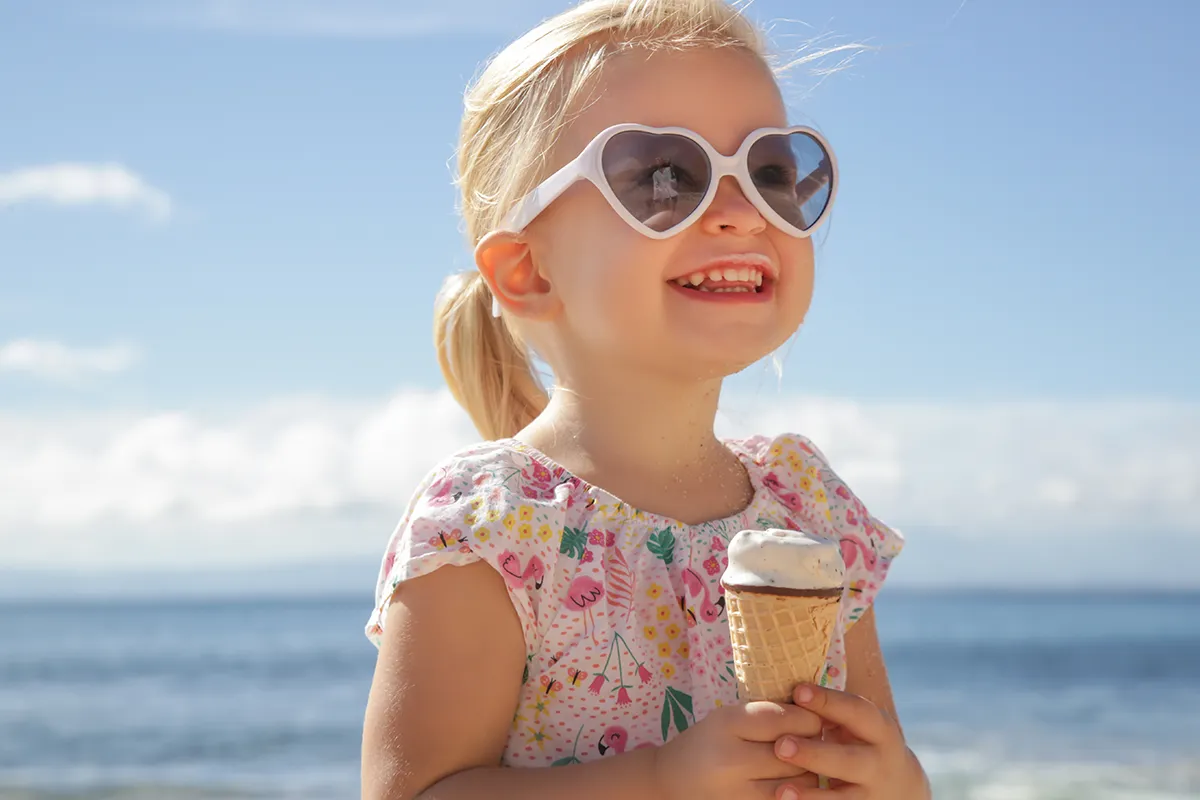
If you’ve ever chased a child down the beach to reapply sunscreen, you already know how quickly sun protection can slip your mind once the fun begins. Sunglasses often fall into that same category, but your child’s eyes need protection just as much as their skin.
In this blog, we’ll share why sunglasses are important for kids, what to look for when choosing a pair, and how they support long-term eye health.
Why kids’ eyes need extra protection
Children tend to spend more time outdoors than adults, whether it’s at the beach, on the playground, or in the backyard. Their eyes are also still developing, which makes them more sensitive to ultraviolet (UV) light.
A child’s natural lens is clearer than an adult’s, which allows more UV light to pass through and reach the retina. Because it doesn’t filter that light as effectively, more of it travels deeper into the eye, increasing the risk of long-term damage.
Over time, repeated UV exposure has been linked to conditions like:
- Cataracts
- Macular degeneration
- Photokeratitis (essentially a sunburn on the eye)
Even though these issues tend to show up later in life, the exposure that contributes to them often begins in childhood.
Sunglasses are more than just a summer accessory
You might think of sunglasses as something you only need on bright beach days, but UV rays are present year-round, even when it’s cloudy.
For kids, wearing sunglasses regularly can:
- Make outdoor time more comfortable by reducing glare
- Cut down on squinting, which can lead to eye strain and headaches
- Help protect developing eye structures during important years
- Encourage habits that support long-term eye health
Sunglasses can be treated just like sunscreen or a hat—an everyday part of getting ready to head outside.
What to look for in kids’ sunglasses
Not all sunglasses offer the same level of protection, so it helps to know what to look for.
When buying sunglasses for kids, we recommend searching for:
- 100% UV protection (UVA and UVB)
- Frames that fit comfortably and stay in place during play
- Durable, impact-resistant lenses for active kids
- Wraparound styles for better coverage from the sides
- Polarized lenses if you want to reduce glare near water or sand
Our expert team at Coastal Family Eyecare can recommend options that fit your child’s age, activities, and comfort level.
Making sunglasses part of everyday life
Getting kids to actually wear sunglasses can take a little creativity, especially if they’re new to it.
A few things that tend to help:
- Letting them pick their own frames (kids are more likely to wear what they choose)
- Keeping sunglasses in the car, backpack, or beach bag so they’re always available
- Wearing your own sunglasses consistently as an example
- Pairing sunglasses with other routines, like sunscreen and hats
The more normal it feels, the less it becomes a “thing to remember” and more just a part of heading outside.
Keeping up with eye health beyond sunglasses
Sunglasses are a great first step, but they’re only one part of caring for your child’s vision. Regular visits with our eye doctor in Orange Beach help ensure everything is developing as it should.
A pediatric eye exam is tailored specifically to a child’s visual needs and development, focusing on overall eye health and how the eyes work together. These visits can help catch vision issues early, track how the eyes are growing and changing, and support better visual comfort for school and activities.
Protecting their vision today and down the road
In the hustle and bustle of everyday life, it’s easy to overlook sunglasses for kids, but those small daily choices really do add up. Protecting their eyes now helps reduce long-term risks like cataracts and macular degeneration, while also making outdoor time more comfortable today.
If it’s been a while since your child’s last visit, schedule an appointment at Coastal Family Eyecare to check their vision and get personalized guidance on protective eyewear.