
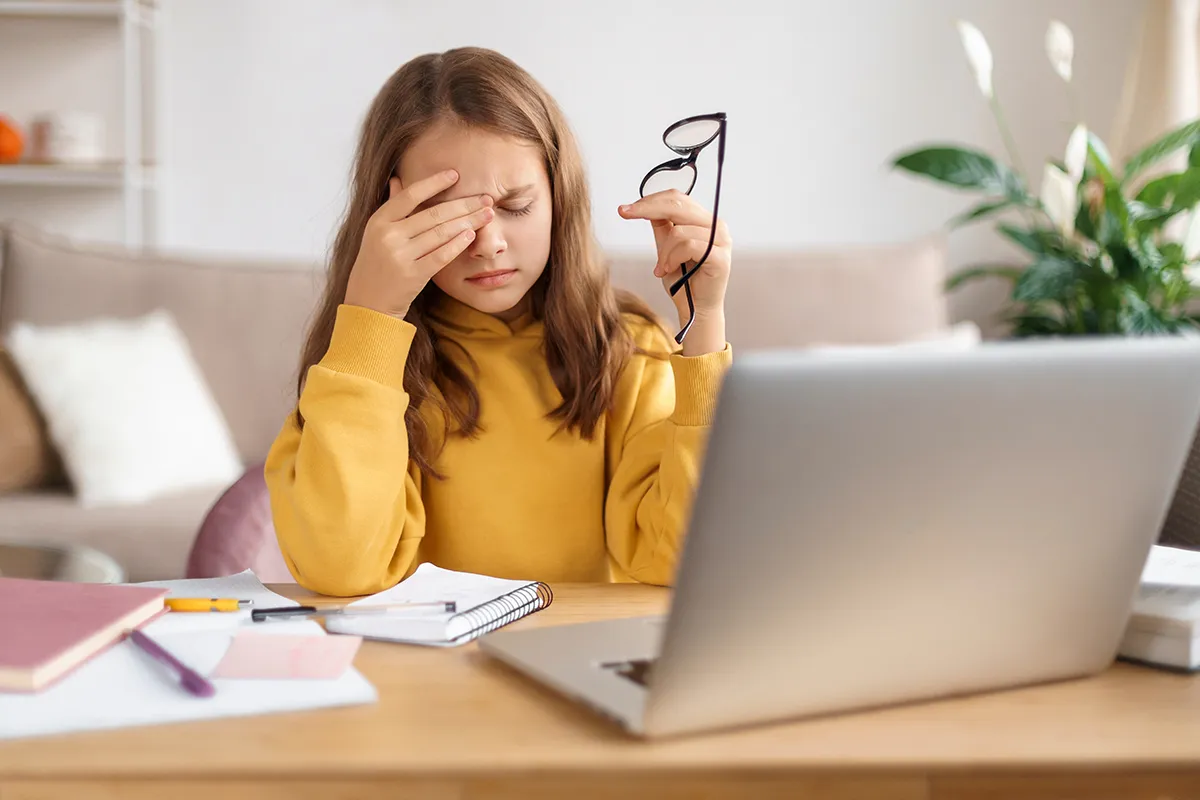
If you’ve started noticing your child squinting at the TV, rubbing their eyes after homework, or drifting closer to books and screens, you may wonder what’s going on. Sometimes those habits are simply fatigue. Other times, they’re early signs of nearsightedness (myopia). In these cases, myopia management can do more than sharpen vision. It can help slow how quickly that nearsightedness progresses as your child grows.
As a parent, you don’t need to diagnose it. You just need to notice the patterns and know what options exist, so you can make confident choices for your child’s comfort and long-term eye health.
What squinting and eye rubbing can tell you
Squinting is a clever “hack” kids do to temporarily sharpen blurry distance vision. It changes how light enters the eye, which can make a far-away board, scoreboard, or classroom screen look a little clearer. Eye rubbing can show up because their eyes feel strained, dry, or tired from trying to focus.
You might spot these common signs at home or school:
- Sitting closer to the TV or holding books/tablets very close
- Complaints of headaches (especially after school)
- Blinking a lot or rubbing eyes during reading and screen time
- Avoiding distance activities (like sports) because things look “off”
- Trouble seeing the board, signs, or faces from across the room
If your child can’t explain what they’re seeing, behavior often tells the story first.
What to expect at a pediatric eye exam
A pediatric eye exam is designed to be kid-friendly, thorough, and practical. We’re not just checking if they can read the letters on a chart, but also how the eyes work together and whether focusing is comfortable.
Depending on your child’s age and needs, the exam may include:
- Distance and near vision testing
- Eye teaming and focusing checks
- A prescription measurement (to see if myopia is present)
- An eye health evaluation to rule out other causes of squinting or rubbing
- A conversation about daily habits (screens, reading, time outdoors)
If myopia is confirmed, we’ll discuss the best next steps, whether that means monitoring, glasses, or a myopia management plan tailored specifically to your child’s needs.
Options that go beyond basic glasses
Glasses can correct blurry vision, but they don’t slow how quickly myopia progresses. That’s why we recommend myopia management to slow myopia progression and lower their risk of eye health issues later in life.
Some families consider:
- Specialty contact lenses designed for myopia control
- Orthokeratology (ortho-k), which uses custom overnight lenses to reshape the cornea temporarily so kids can see clearly during the day without glasses
- Additional tools and guidance around visual habits, screen breaks, and outdoor time
Each option comes with its own benefits and considerations, and factors like comfort, responsibility level, activity needs, and cost all play a role. The most successful plan is one your child can realistically maintain over the long term.
How to support your child’s vision between visits
Small routine changes can reduce strain and support healthier visual habits:
- Encourage outdoor time most days; even 20–40 minutes helps
- Have them follow the “20-20-20” rule: look 20 feet away for 20 seconds every 20 minutes
- Keep screens at a comfortable distance (not inches from the face)
- Make sure the lighting is adequate for reading and homework
- Pay attention to patterns: what activities cause your child to rub their eyes?
Protect their vision now, support their confidence daily
Clearer vision can change how your child feels about school, sports, and everyday tasks. If you’ve noticed squinting, eye rubbing, or creeping closer to screens, a pediatric eye exam can uncover the issue and open the door to personalized myopia management options like ortho-k or specialty contact lenses.
Schedule an appointment with Coastal Family Eyecare in Orange Beach today to get answers and a plan that fits your child’s life.